When you look at a full BIM model of a steel plant or a process facility, the craft is obvious. Every pipe, every vessel stack, every cooling tower, every access platform, and every interconnecting service, modelled with precision and coordinated across structural, mechanical, civil, and process disciplines. It is a construction-ready deliverable.
But a model is a promise, not proof. The plant still has to be built to match it. And on an industrial site, the gap between the model and the built reality is where the real cost hides.
Industrial BIM is a different discipline
Standard building projects deal with clashes. Industrial projects deal with consequences. Safety-critical clearances, maintenance access envelopes, process piping running through structural and electrical zones, thousands of interconnected systems. The coordination demand goes far beyond typical MEP clash detection inside the model.
Rework here is not just costly. It can be dangerous. A blocked maintenance envelope or a misrouted pipe run is not a cosmetic issue. It is a problem found at commissioning, when it is most expensive to fix. Industry research puts rework at roughly 5 to 9 percent of contract value (Navigant Consulting). On a plant-scale project, that number is enormous.
Where the model and reality drift apart
The model is right. The build drifts.
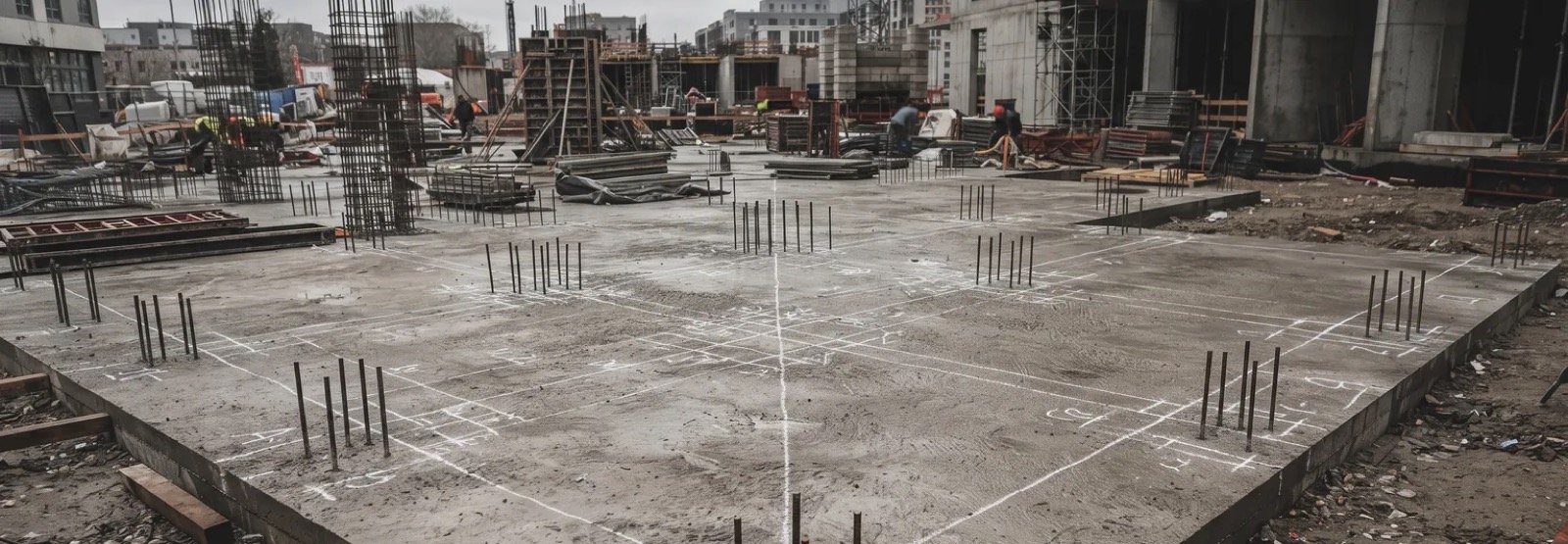
Pipe runs get field-routed. Supports get substituted. Equipment bases land a little off. Platforms and railings change on the fly. Each decision is small and reasonable in the moment. Together they pull the built plant away from the coordinated model, quietly, until someone needs the model to be true and it is not.
This is the plan vs as-built problem. On an industrial site it is nearly impossible to catch with a tape measure, a set of 2D drawings, and a federated model no one can physically stand inside.
AR site verification closes the gap
This is where augmented reality on site changes the QC process.
Instead of comparing a drawing to a wall, you overlay the coordinated model directly onto the physical structure and walk through it. Modelled pipe run versus installed. Modelled equipment base versus poured. Modelled access platform versus erected steel. You see the deviation in place, at full scale, level by level.
That is BIM as-built comparison done on the actual site, not at a desk weeks later.
How DeltaARBIM works with your model
DeltaARBIM is built for exactly this. Verifying a finished model against the plant that gets built.
- It takes your model as-is. DeltaARBIM is IFC-first, so it ingests your coordinated federated model directly. No re-authoring. Whether the model was built in Revit, Tekla, or a plant-specific tool, IFC carries it in.
- It anchors to the real plant. On site, the model loads on an iPad and LiDAR registers it to the physical structure at plus or minus 2cm accuracy. No QR markers on the steel. No manual alignment.
- It turns the model into a walkable check. Stand in a process area and the overlay shows what was modelled against what was installed. Clearances, MEP routing, structural supports, all verified where they actually are. This is MEP validation and clash checking done on site, not predicted from a screen.
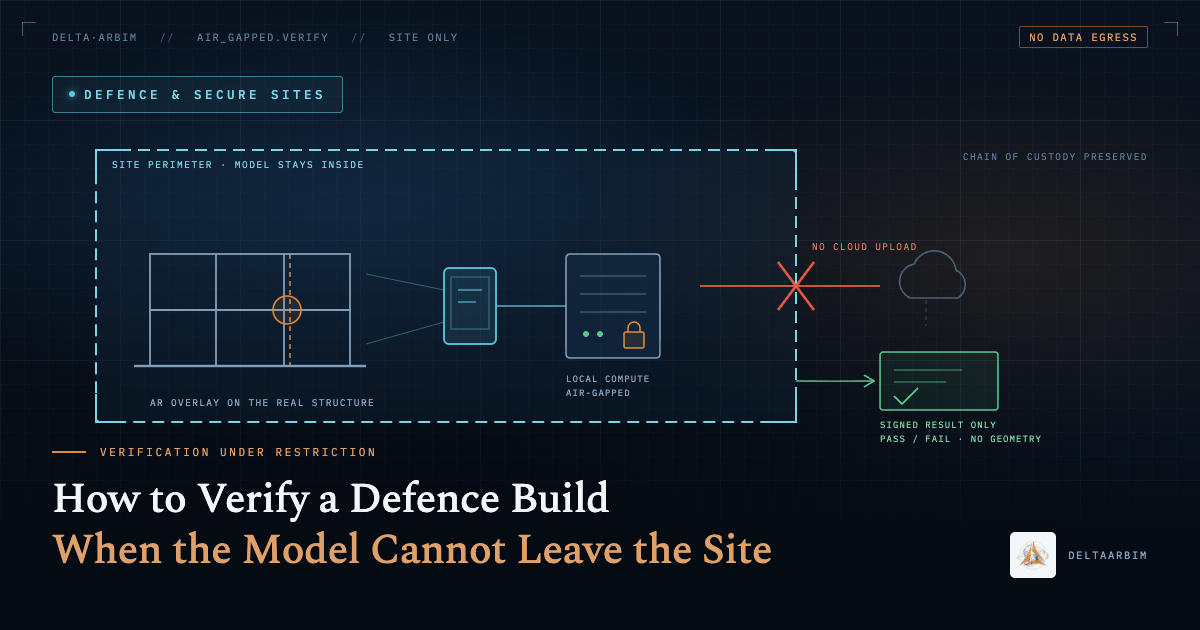
- It keeps your data in your control. DeltaARBIM is self-hosted, so plant and process data stays inside your environment. On an industrial project, that matters more than anywhere else.
- It feeds as-built confidence forward. Verified deviations flow back into the model, so the owner carries an accurate as-built into facilities management instead of a drawing set no one trusts.
What it means for each team
For the EPC or contractor, deviations get caught before they are buried behind cladding or discovered at commissioning. For the owner, you gain genuine as-built confidence that supports handover and facilities management. For the BIM team, the model stays the single source of truth instead of drifting into a document people stop believing.
An honest note on scope
DeltaARBIM does not produce your model. It verifies your model against the build. It complements the modelling work, it does not replace it. That is the whole point. The better your model, the more valuable a precise on-site check becomes.
Built in India, for industrial projects everywhere
DeltaARBIM is developed in Ahmedabad, Gujarat, close to the industrial and infrastructure growth around GIFT City and across the region. It is IFC-native, self-hosted, and made in India, built for the plants and facilities being constructed here and abroad.
If you are delivering an industrial or infrastructure project and want to close the gap between the model and the build, we would love to show you how it works on your site.
See the extended demo: https://vimeo.com/1211164305?fl=ip&fe=ec
Or reach us at build@deltaarbim.tech