Precast is having its defining year, and the growth is not spread evenly. A handful of structural shifts are pulling the whole industry forward at once. Here is what is moving, and the operational gap that decides who actually profits from it.
Data centers are carrying the industry
Traditional commercial real estate is soft. Data centers are not. The National Precast Concrete Association 2026 Outlook puts data center spending up 23 percent to nearly $52 billion, funneled into $1 billion plus megaprojects that run almost entirely on precast systems. The reason is simple. These builds need speed, predictable supply chains, and heavy structural loads, and precast delivers all three. Speed is the whole point.
In India, precast is becoming the baseline
In India, precast is shifting from an alternative method to a bid requirement. The National Highways Authority of India is enforcing a mandatory 25 percent precast requirement on new highway projects, just to qualify for bids, with similar quotas expected for railway and airport expansion. Large developers are already using precast to cut floor cycles well below what conventional pours allow.
Consolidation and greener concrete
Capacity is consolidating around the players who can deliver at scale. Tindall Corporation acquired Atlanta Structural Concrete to expand across the US Southeast, and Heidelberg Materials posted strong Q2 growth built on precast-focused acquisitions. On the factory floor, AI and BIM are being wired into production to sync workflow with on-site crane deployment, while low-clinker binders and CO2-capturing curing are turning 10 to 15 percent cement savings into carbon credits.
The half nobody is pricing in
Here is the thread running through all of it. Precast wins on speed and predictability. But that advantage only holds if every element fits the first time it reaches the site.
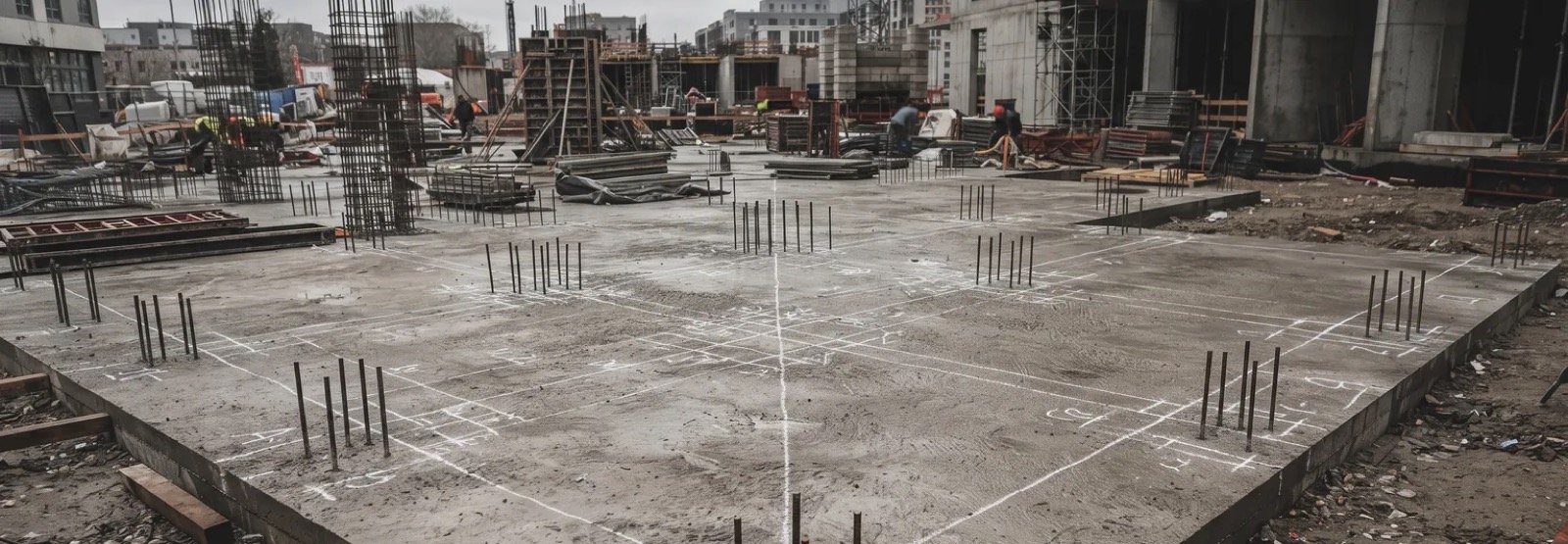
A panel cast slightly off. A connection embed a few centimetres out of position. A base plate that does not line up with the column above it. Each is small on its own. On a 3-day floor cycle, any one of them stops a crane and breaks the rhythm the entire schedule depends on. Precast does not forgive a fitment error the way cast-in-place does, because there is nothing to adjust once the element arrives.
That is a verification problem. And it scales in direct proportion to precast volume.
What verification actually costs, in numbers
Rework runs 5 to 9 percent of contract value across construction (Navigant Consulting). On a Rs 100 crore precast package, that is Rs 5 crore to Rs 9 crore exposed to rework. On a $1 billion data center, the same percentage is enormous. That exposure is exactly what precast speed is meant to protect, and exactly what a fitment error attacks first.
The way to protect it is to check the built structure against the model before the crane commits, not after.
Where DeltaARBIM fits
DeltaARBIM verifies what was built against what was modelled, on site. It overlays your coordinated model onto the physical structure using iPad LiDAR at plus or minus 2cm accuracy. It is IFC-first, so it reads your model directly with no conversion step. And it is self-hosted, so your project data stays inside your environment.
In practice, that means:
- Verify precast elements in position against the model before the crane commits, catching a drifted panel line or a misplaced embed while it is still cheap to fix.
- Run plan vs as-built checks and MEP validation on site, walking the structure instead of predicting fit from a drawing.
- Protect the cycle time that makes precast worth choosing in the first place.
- Hand the owner an accurate as-built at handover, instead of a model no one fully trusts.
We covered how this looks on a real pour in an earlier site walkthrough. The precast wave only sharpens the case for it.
Built in India, for the projects driving the boom
DeltaARBIM is developed in Ahmedabad, Gujarat, close to the infrastructure and industrial growth around GIFT City. As precast becomes a bid baseline across Indian highways, railways, and airports, the firms that keep the model and the built structure in lockstep, at speed, are the ones who will turn the boom into margin.
If you are scaling precast delivery and want the model to stay true on site, see how it works: watch the extended demo.
Or reach us at build@deltaarbim.tech