The most expensive construction mistakes in history did not happen because someone could not do the maths.
They happened because a problem stayed invisible until it was built.
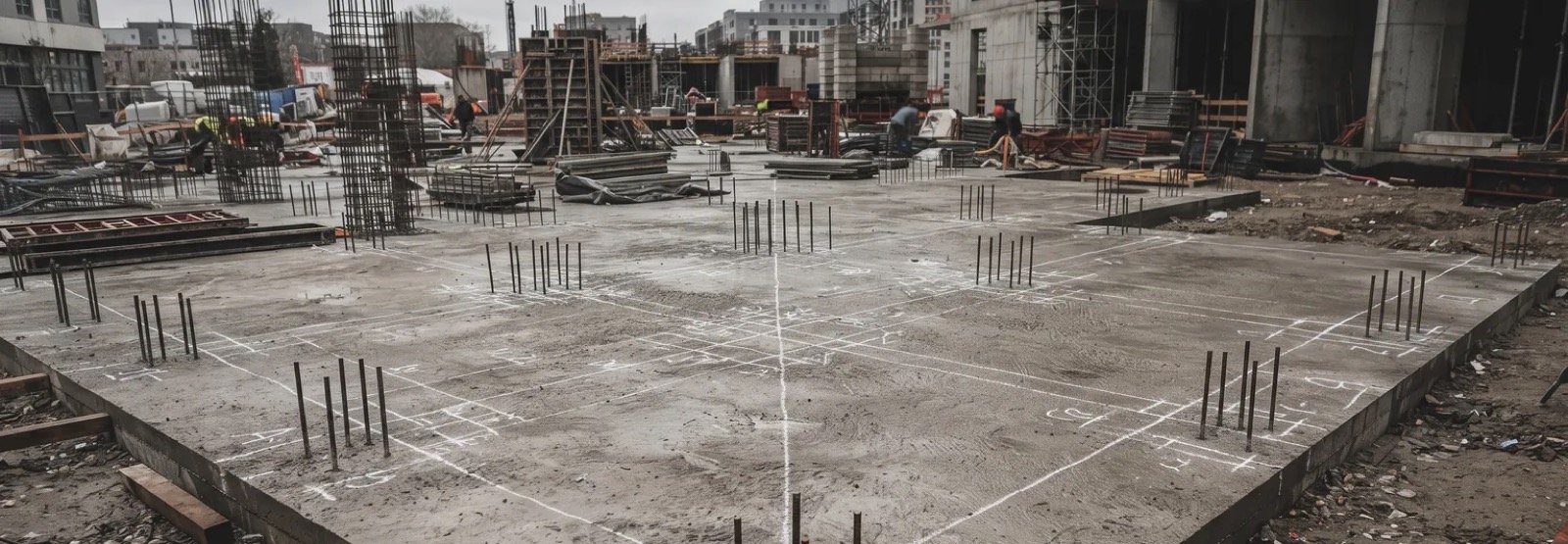
Costly construction errors are rarely one dramatic failure. They are a small assumption that nobody tested, carried quietly into concrete, steel, and glass, where fixing it costs a thousand times more. Construction cost overruns almost always start this way.
Why construction mistakes get so expensive
The cost of a mistake is not the mistake. It is everything attached to it.
Rework. Delay. Idle crews. Vendor remobilisation. Litigation. And the reputational damage that follows a project for years.
The number worth remembering
Construction rework runs at roughly 5 to 9 percent of contract value (Navigant Consulting). On a Rs 100 crore project, that is Rs 5 crore to Rs 9 crore. A large share traces back to poor coordination and bad data, not bad engineering.
Construction defects follow the same curve. Caught in a model, a fix costs hundreds. Caught on site, thousands. Caught after handover, millions.
Five of the most expensive construction mistakes in history
Each of these has a root cause worth naming.
How BIM prevents construction errors, and where it stops
Here is the honest part that most articles skip.
BIM would have caught three of those five. It would not have caught the other two.
Facade failures like the Aon Center are a coordination and specification problem. Modelled to fabrication level, with materials carrying real properties, the conflict surfaces on screen.
Glare and solar issues like Fenchurch Street are caught by sun-path and environmental simulation, run in an afternoon, long before glass is ordered.
Overruns like the Opera House are what 4D scheduling and 5D cost estimation exist for. Sequence and spend are tested against the model before anyone breaks ground.
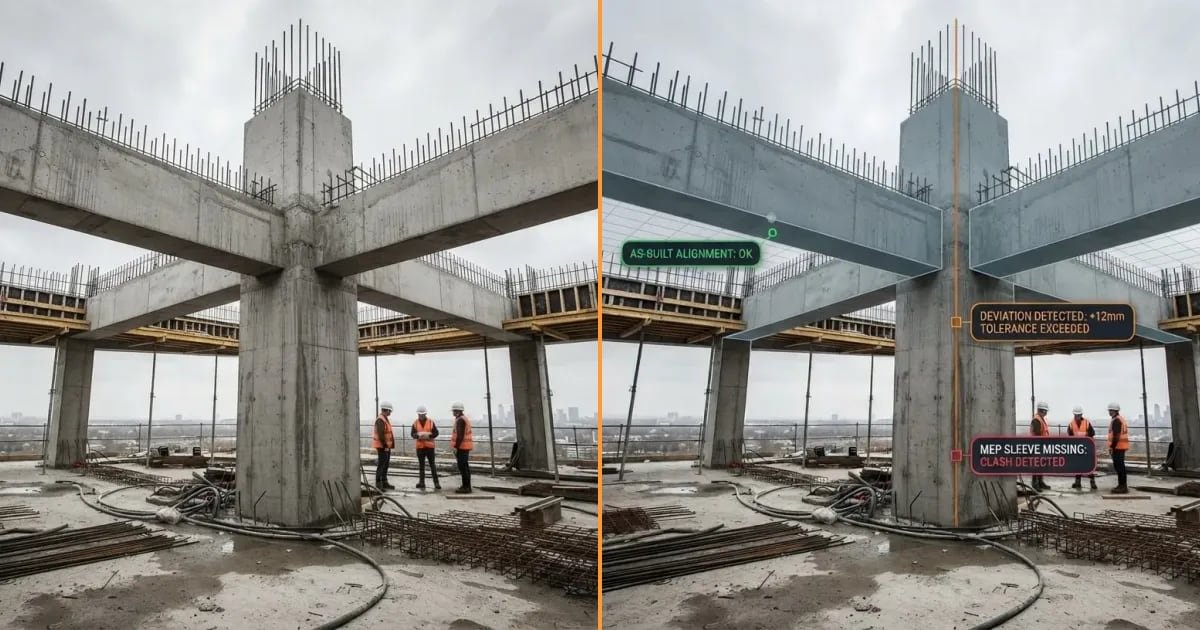
Seongsu and Lotus Riverside were not design failures. The drawings were not the problem. What got built did not match them.
That is the limit of any model. A perfect BIM model cannot tell you whether the weld was done properly, or whether someone piled soil against a foundation that was never designed to take it.
From hindsight to foresight
Which is why the full answer has two halves.
Coordination decides what should be built. Verification confirms what actually was.
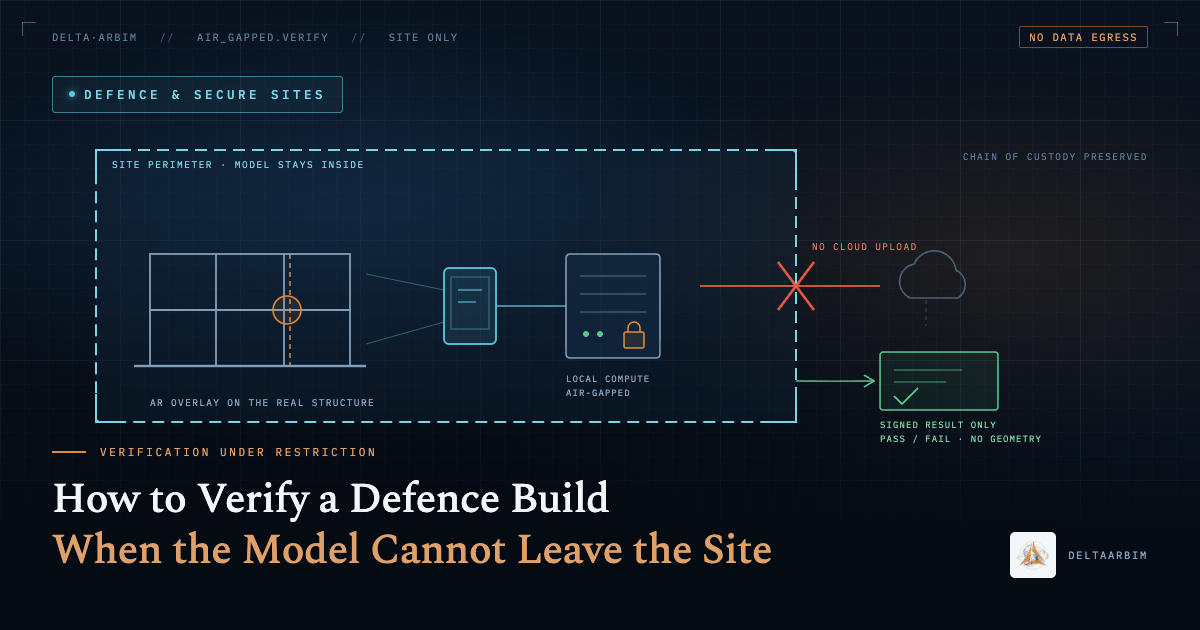
DeltaARBIM covers the second half. Using an iPad and LiDAR, it overlays the approved model onto the physical structure at plus or minus 2cm, so deviations are caught while they are still cheap to fix. On a real slab, 152 structural elements were verified in place before the next trade built on top.
Think of it as risk control rather than cost. A deviation caught in a model costs hundreds. The same deviation caught after handover has cost projects millions, and in the worst cases, lives.
Common questions
How does BIM reduce construction errors?
BIM federates architectural, structural, and MEP models into one coordinated model, then runs clash detection to surface conflicts before construction. Problems get resolved on screen, where a change is a few clicks rather than a demolition.
What is the cost of rework in construction?
Industry research puts rework at roughly 5 to 9 percent of contract value (Navigant Consulting). Much of it traces to coordination gaps and outdated information rather than engineering error.
Can BIM prevent cost overruns on large projects?
It significantly reduces them. 4D scheduling and 5D cost estimation test sequence and spend against the model before work starts. But BIM cannot catch what happens after approval, which is where on-site verification takes over.
The expensive construction mistakes in this article all share one trait. Someone found out too late.
We broke down which firms carry which share of that cost in our firm-by-firm BIM guide. For more on the open standard behind coordinated models, the IFC schema is maintained by buildingSMART.
If you want to see verification on your own project, reach us at build@deltaarbim.tech.