The global Virtual Design and Construction (VDC) market is crowded with legacy technology giants. Multi-billion dollar conglomerates have dominated construction tech for decades, providing incredible desktop solutions for complex 3D engineering, structural design, and coordination.
However, as fast-paced megaproject hubs like Singapore and the UAE continue to compress delivery timelines, these massive platforms are hitting a wall. Their flaw isn't a lack of features—it is a fundamental lack of mobility, speed, and approachability on the actual construction site.
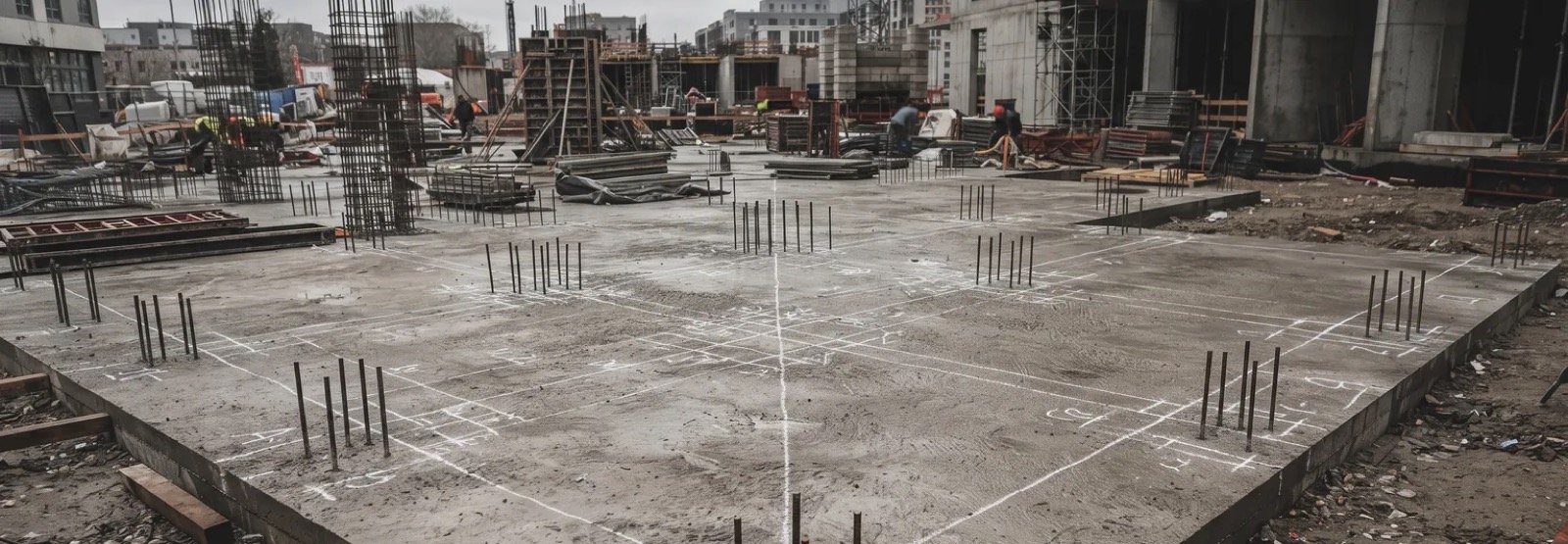
While legacy giants build heavy systems designed for engineering offices, DeltaARBIM was engineered from the ground up for the raw concrete slab. Here is exactly why DeltaARBIM is disrupting the AEC industry and why it offers a completely different, high-velocity alternative to traditional ConTech competitors.
1. From Hardware-Heavy to Mobile-First Portability
When tech giants approach on-site verification, their solution almost always involves heavy, ultra-expensive terrestrial laser scanners or specialised, single-use proprietary hardware helmets and glasses.
To run a traditional "Scan-to-BIM" sequence on a modern build, a contractor must invest upwards of $50,000 to $100,000 in hardware alone. These complex laser stations require specialised technicians to calibrate, set up, and transport them across a dusty, active construction environment. If a heavy tripod tips over on a raw slab, thousands of dollars in optical equipment are instantly destroyed, causing immediate project downtime.
DeltaARBIM completely democratizes site scanning by leveraging a device your team already owns: the iPad Pro.
By deploying advanced spatial computing directly over standard consumer-grade mobile hardware, DeltaARBIM removes the high barrier to entry. Field supervisors don't need to carry heavy cases or wear clunky, uncomfortable proprietary headsets that compromise field visibility and safety. They simply pull out an iPad, tap the app, and begin an advanced edge-to-edge AR scan using the built-in LiDAR and tracking sensors. It is lightweight, rugged, and completely mobile.
2. From Delayed Data Processing to 15-Minute Reality Checks
The biggest workflow bottleneck with legacy competitors is the "time-to-data" gap. Traditional laser scanners collect massive, dense files known as point clouds. Because these files are so large, they cannot be processed on-site.
Instead, a technician must take the data back to an office workstation, upload it, clean up the digital noise, map it against the master Revit model, and generate a clash report. By the time the field team receives the report, days or even weeks have passed. In that timeframe, subcontractors have already poured more concrete or installed more ductwork over the error, turning a small clash into a massive, multi-million dollar rework.
DeltaARBIM operates entirely in real-time.
We don't bring the physical site back to an office computer; we bring the coordinated 3D design twin straight to the field. As a field manager walks the slab, DeltaARBIM overlays the coordinated IFC models directly onto the raw structure in 1:1 scale AR. The system dynamically calculates tolerances and structural deviations down to $\pm$2cm instantly. Instead of waiting weeks for a processing queue, site engineers run automated edge-checking routines and catch installation mistakes in a quick 15-minute field walk.
3. From Complex, High-Skill Systems to "Zero-Training" Software
Legacy software giants build platforms packed with thousands of complex tools, drop-down menus, and script variables. While these systems are highly powerful for a senior design engineer sitting at a desk with dual monitors, they are completely unusable for a busy site supervisor dealing with material deliveries, sub-contractor management, and active field chaos.
When software requires a 6-week certification course just to open a model and check an alignment path, field adoption drops to zero. Site teams quickly abandon the technology and revert to rolling out flat, 2D paper blueprints.
DeltaARBIM is intentionally built for the frontline builder.
We stripped away the clutter to focus entirely on high-impact, actionable field data. The user interface is clean, intuitive, and built around a simple premise: look through the camera screen and see if the physical build aligns with the digital blueprint. Within 5 minutes of opening the app, a site supervisor can comfortably visualise hidden subterranean utility lines, verify embedded conduits, and check MEP paths. It requires zero specialised technical training, ensuring immediate field adoption and true cross-team collaboration.
4. Protecting Profit Margins by Preventing Errors vs. Documenting Them
Perhaps the most philosophical difference between DeltaARBIM and giant legacy competitors is how we view construction errors. Traditional "Scan-to-BIM" workflows are entirely reactive. They are designed to document a building after it has been constructed. Essentially, legacy scanners are highly sophisticated tools for measuring the financial damage of a mistake after it has already hardened in steel and concrete.
DeltaARBIM is a proactive line of defence designed to protect project budgets before errors occur.
Because our mobile AR pipelines allow for continuous, daily incremental checks on the active deck, errors are caught before they cascade into project-stalling bottlenecks. Catching a misaligned formwork edge or a blocked HVAC penetration route right before a major pour means the problem can be corrected on the spot with a hand tool. By replacing reactive documentation with proactive AR verification, DeltaARBIM helps contractors virtually eliminate the unmanaged reworks that traditionally consume up to 10% of a project's total budget.
Conclusion: The High-Velocity ConTech Alternative
Tech giants built the digital engineering world, and their office design tools remain essential. But when it comes to the rugged, high-speed reality of a live construction site, heavy hardware and delayed office data processing loops simply cannot keep pace with modern project schedules.
DeltaARBIM doesn't try to be a heavy desktop design engine. Instead, it acts as the tech power arm for field execution. By transforming the iPad into a real-time spatial verification tool, it bridges the gap between digital intent and physical reality instantly, giving agile contractors the competitive edge they need to build faster, cleaner, and more profitably than ever before.
Ready to Experience Millimetre-Level Precision on Your Site?
Don’t let manual measuring tapes and traditional 21-day coordination loops drain your project’s profit margins. Give your AEC team the ultimate technological edge and deliver your next build with complete spatial certainty.
Get Started with DeltaARBIM Today:
-
🌐 Explore Our Features: Visit our Demo Hub
-
📺 Watch the Tech in Action: View Live Site Scanning Video